Lubbock's mosquito season, honestly
The Texas peak-activity months are June, July, and August. But Lubbock's mosquito season technically runs **April through October** — roughly 7 months a year. The early-season population (April-May) is low but present. Warm spring rains and the first humid days push the first generation out. By the time anyone notices them in late May or early June, that first generation has already bred, and the second and third generations are on the way.
That's why starting treatment in June feels like you're fighting a rising tide. You are. A barrier program that starts in March or early April controls the population you'd rather not see grow; a program that starts in June has to suppress a population that's already peaking.
Two species matter most in Lubbock:
- **Culex quinquefasciatus** — the common "southern house mosquito." Prefers organically rich standing water (clogged gutters, neglected pools, storm drains, birdbaths with algae). Ubiquitous east of the Pecos in summer. Carries West Nile Virus and St. Louis Encephalitis. - **Culex tarsalis** — more common in the open country around Lubbock than inside the city proper, but crosses into yards. Also carries West Nile.
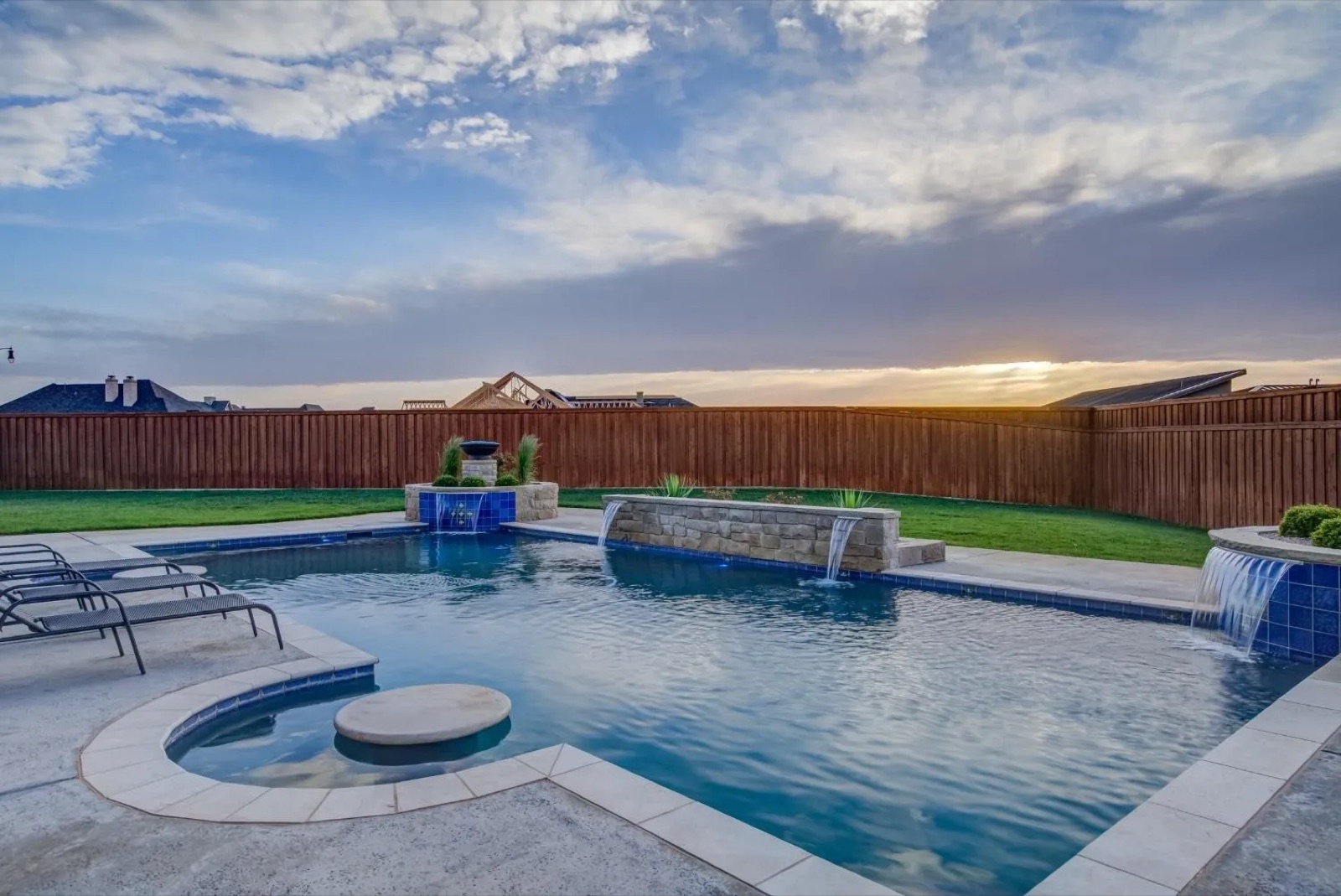
**Aedes** species (which get most of the "mosquito season" press because they're aggressive biters) are less of a Lubbock issue than a Gulf Coast issue. But they're here, and they breed in clean standing water in man-made containers — the pot saucer, the kids' bucket, the kiddie pool, the tarp with a pocket of rainwater.
West Nile in Lubbock is not theoretical
Lubbock Public Health has confirmed West Nile Virus–positive mosquito pools in the city repeatedly over the past decade. The Centers for Disease Control reports West Nile Virus activity in Lubbock County in most years since 2002.
Around 80% of West Nile infections in humans are asymptomatic. Of the 20% that show symptoms, most look like flu. A small percentage — higher in adults 60+ and in people with compromised immune systems — develop West Nile neuroinvasive disease, which is serious and can be fatal. There's no human vaccine and no specific treatment beyond supportive care.
That's why mosquito control in Lubbock isn't purely a quality-of-life issue. It's a public health issue with a specific, known pathogen carried by a specific, known species that breeds in specific, known conditions. And the control approach that actually works is well-documented.
Source reduction comes before spray (always)
No barrier treatment in the world will beat an un-addressed breeding source. Before any spray application, and before hiring anyone for treatment, walk your property and handle these:
- **Clear gutters** of leaf and debris buildup. A clogged gutter section holds water for days after a rain — perfect Culex habitat. - **Empty standing water** anywhere it collects — pot saucers, buckets, tarps, kiddie pools, wheelbarrows, toys, birdbaths (refresh weekly), plant trays, clogged downspouts. - **Treat unavoidable water** with **Bti** (Bacillus thuringiensis israelensis) mosquito dunks. Bti is EPA-approved, targets mosquito larvae specifically, and is non-toxic to fish, wildlife, pets, and pollinators. One dunk treats 100 square feet of water for 30 days. For ornamental ponds, French drains, or any water you can't remove, this is the tool. - **Trim heavy vegetation** where adult mosquitoes rest during the day. They prefer shaded, humid, still-air zones. Opening up the understory of dense shrubs reduces available rest habitat, and it also gives the barrier spray a better application surface. - **Screen your rain barrel** if you have one. A tight mesh keeps females from laying eggs.
None of this is optional. A barrier spray applied to a yard with three active breeding sources is money half-wasted.
What a barrier program actually does
Once source reduction is handled, a barrier spray is the tool that controls the biting adult population in your outdoor living areas. Here's what's really happening when a crew applies one:
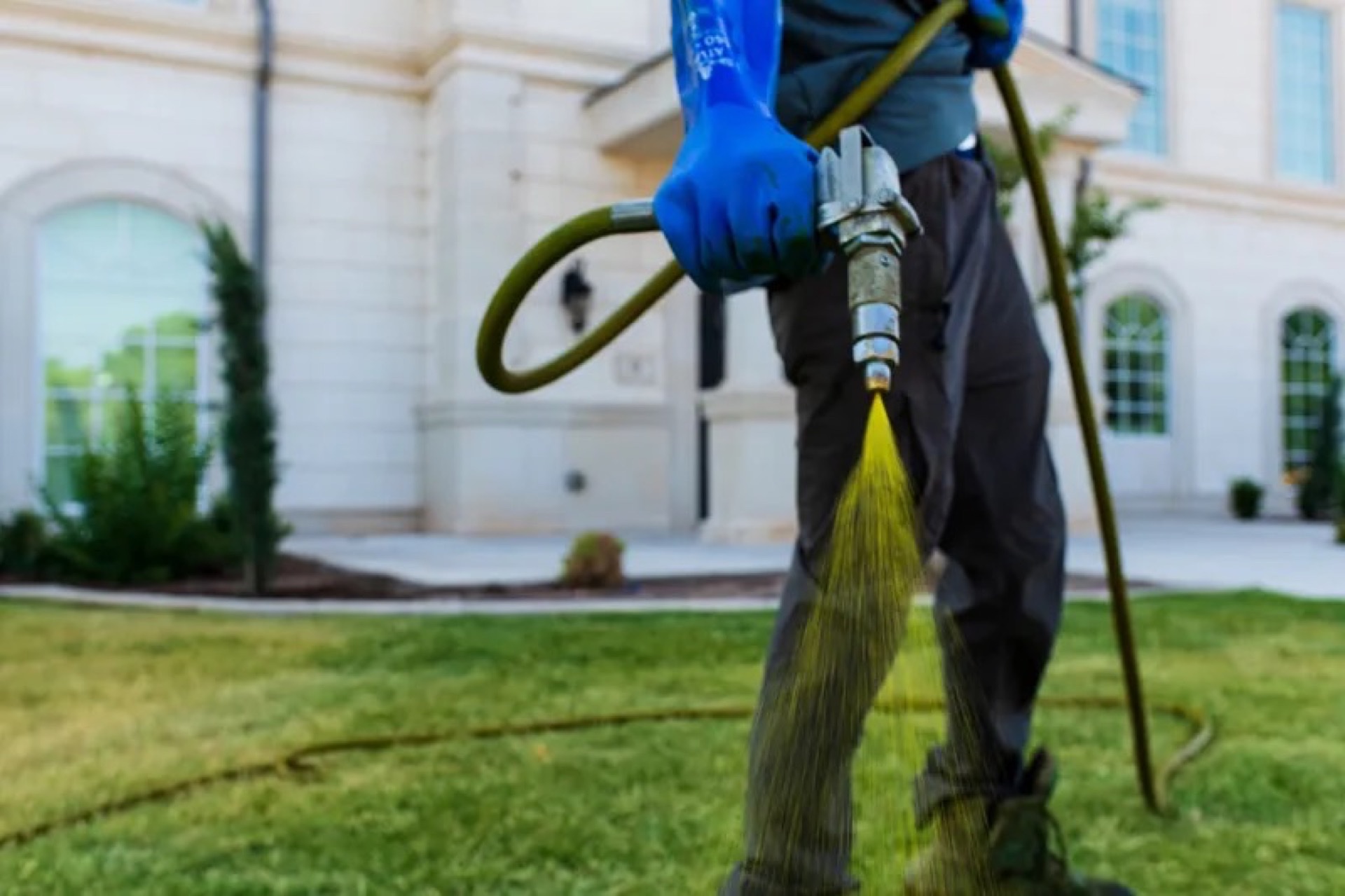
- **The product** is usually a pyrethroid or synthetic pyrethroid (bifenthrin, permethrin, lambda-cyhalothrin, or similar), applied at low concentration as a fine mist to the undersides of foliage, under deck rails, around fence lines, and other adult resting surfaces. It's not a fog — it's a targeted residual application. - **The residual** binds to the foliage and stays effective for 14-21 days depending on rain, sun, and humidity. Mosquitoes that land on treated surfaces to rest absorb the product and die within hours. - **Coverage expectation:** 80-90% reduction in adult activity within 48 hours, sustained through the application cycle. That's real-world data, not marketing. - **Cadence:** every 21 days through peak season (roughly June through September). Starting in March or early April gives the season a head start; starting in May-June means catching up. - **Weather impact:** heavy rain within 24 hours of application washes it off. Reputable crews will reschedule or come back under warranty if that happens.
Application is 15-30 minutes on a typical Lubbock yard. It's quick because it's targeted — not a full-yard flood, just the resting surfaces where adult mosquitoes actually spend their time.
What doesn't work
- **Tiki torches and citronella candles.** Reduce mosquitoes in the immediate 3-foot radius around the candle. Not meaningful beyond that. - **Ultrasonic repellers.** Multiple peer-reviewed studies show zero effect on mosquito activity. - **DIY foggers from the hardware store.** They work, briefly, but the coverage is inconsistent and the residual is gone in hours, not weeks. You'd need to fog nightly to get barrier-level control, which is neither practical nor responsible. - **"Mosquito-repelling plants"** (citronella, lavender, lemongrass). Pleasant to have, negligible effect on actual mosquito population. - **Bug zappers.** Kill more beneficial insects than mosquitoes. Actually counterproductive. - **Starting a barrier program after peak season.** You can reduce activity but you'll never catch up to what starting on time would've achieved.
The two things that genuinely work are source reduction and properly-applied barrier spray. Everything else is marketing.
What we offer
Our mosquito control is part of the turf solutions division alongside weed control, fertilization, and over-seeding. We run 21-day barrier programs April through September for residential customers, pre-season walkthroughs to identify source reduction opportunities, and commercial programs for properties with pools, HOAs, or event venues that need tighter control.
A residential barrier program is six treatments over the season, every three weeks from April through September, at $78.70 per treatment on a 4,500 sq ft yard. We'll walk the property before the first application, flag sources we can't treat without your action, and document conditions after each visit. The goal is honest population control — not an unusable outdoor space.
If you're already getting bit in May, it's not too late to start — but it's the kind of "not too late" that will cost you a few weeks of catch-up. If you're reading this in March, that's the right time. Our landscape maintenance customers often bundle mosquito treatment with their regular service — one crew, one schedule, one invoice.